
History and art
Almost a hundred years of coffee, cake and conversation on Grafton Street, in a building that’s as much a gallery as a café.
Through the years
- 1800s
A tea merchant family
Charles Bewley brings Ireland’s first direct tea imports from China, and the family business grows from tea into coffee and baking.
- 1927
Grafton Street opens
Ernest Bewley joins two townhouses into a grand café on the city’s main street. Their twin fireplaces still greet you inside.
- 1950s
The Mary Cake
Henry Spelter, a confectioner who came to Ireland as a refugee after the Hungarian Uprising, adapts his recipe with Alfred Bewley.
- 1980s
The Campbell family
The Campbells take over the business. Jim Fitzpatrick’s window Cruitne follows in 1990.
- 1999
The Café Theatre
Lunchtime drama begins in the room upstairs. It wins the Irish Times Judges’ Special Award in 2004.
- 2022
The Mary Cake comes home
Lost for twenty years, the recipe returns after Victor Bewley’s granddaughter finds Henry Spelter’s granddaughter in New York.
The front
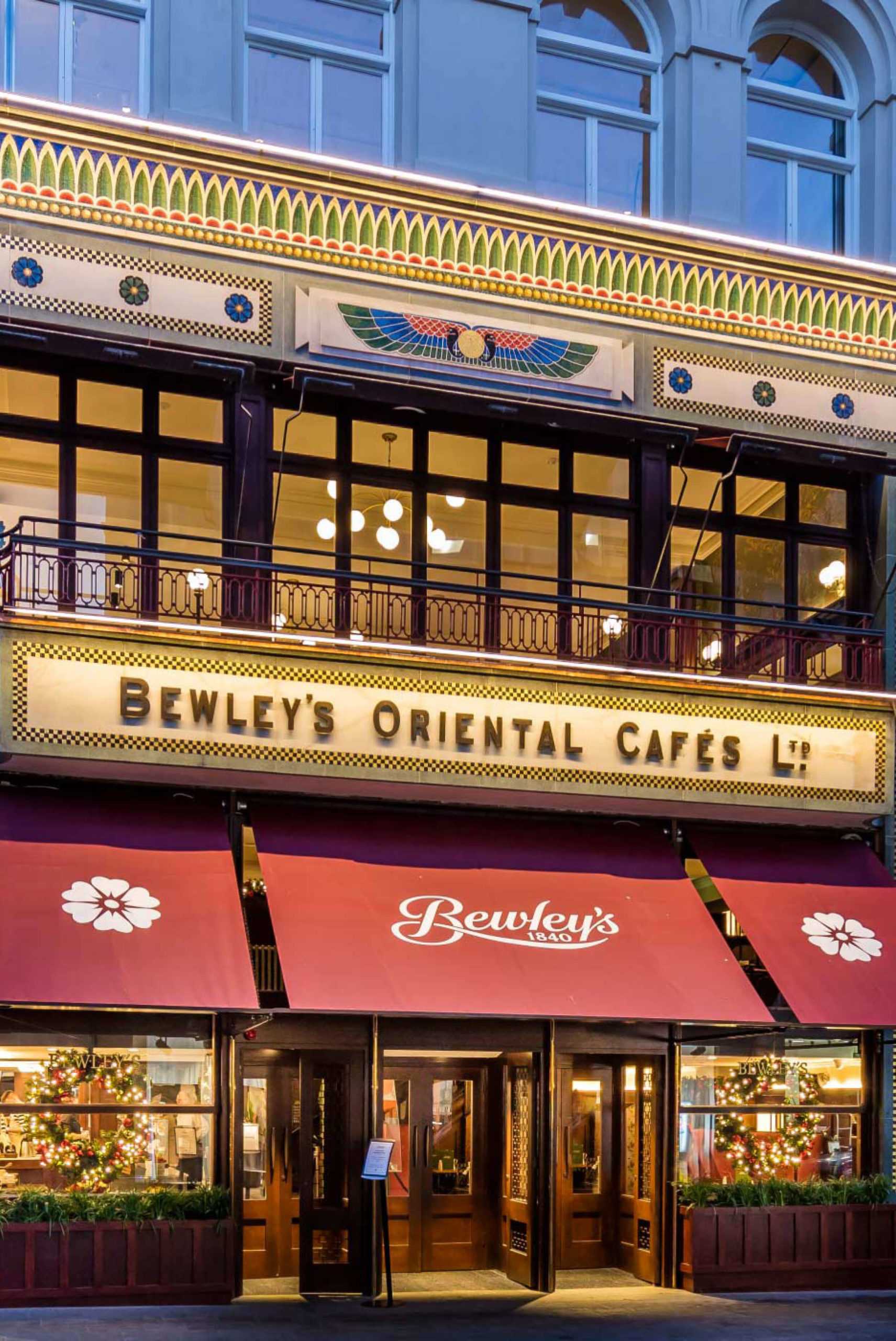
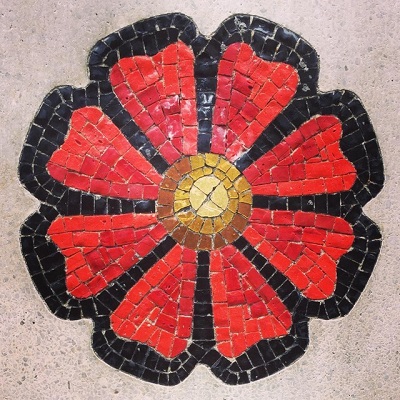
When the café opened in 1927, Europe was in the grip of all things Egyptian after the discovery of Tutankhamun’s tomb in 1922. The façade’s mosaics and lotus details come from that moment, and it’s still one of the best-known shopfronts in Dublin.
The rooms
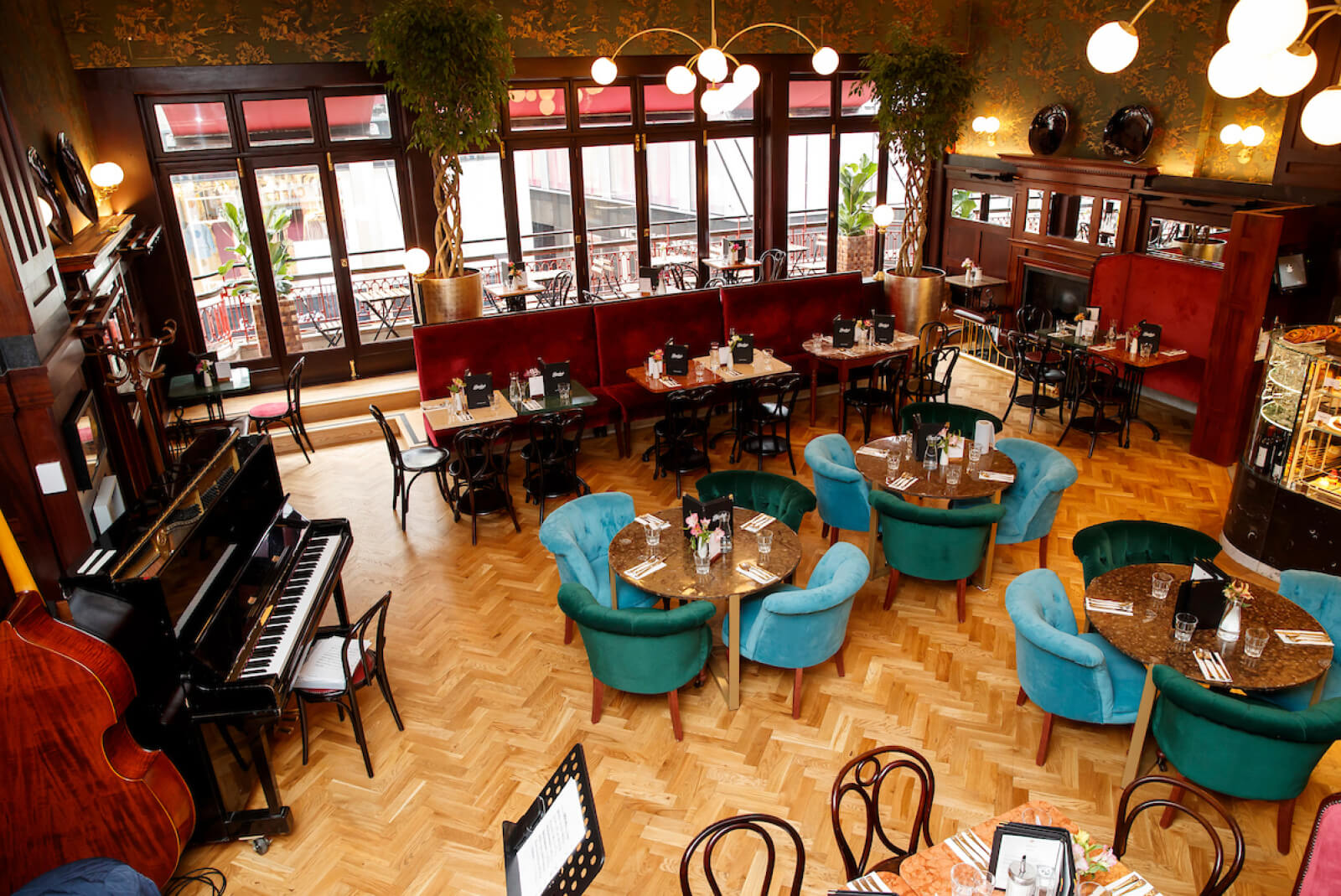
The café was made from two townhouses, from the days when Grafton Street was residential, and their twin fireplaces still greet you inside. Upstairs, the Garden Atrium looks down over the café floor; Whyte’s Academy remembers the school where Robert Emmet, Thomas Moore and the Duke of Wellington were pupils, beside a mural by Sinead O’Reilly; and the James Joyce Room keeps its handcrafted wallpaper and Harry Clarke glass.
The windows
Stained glass by three generations of Irish artists.
Harry Clarke
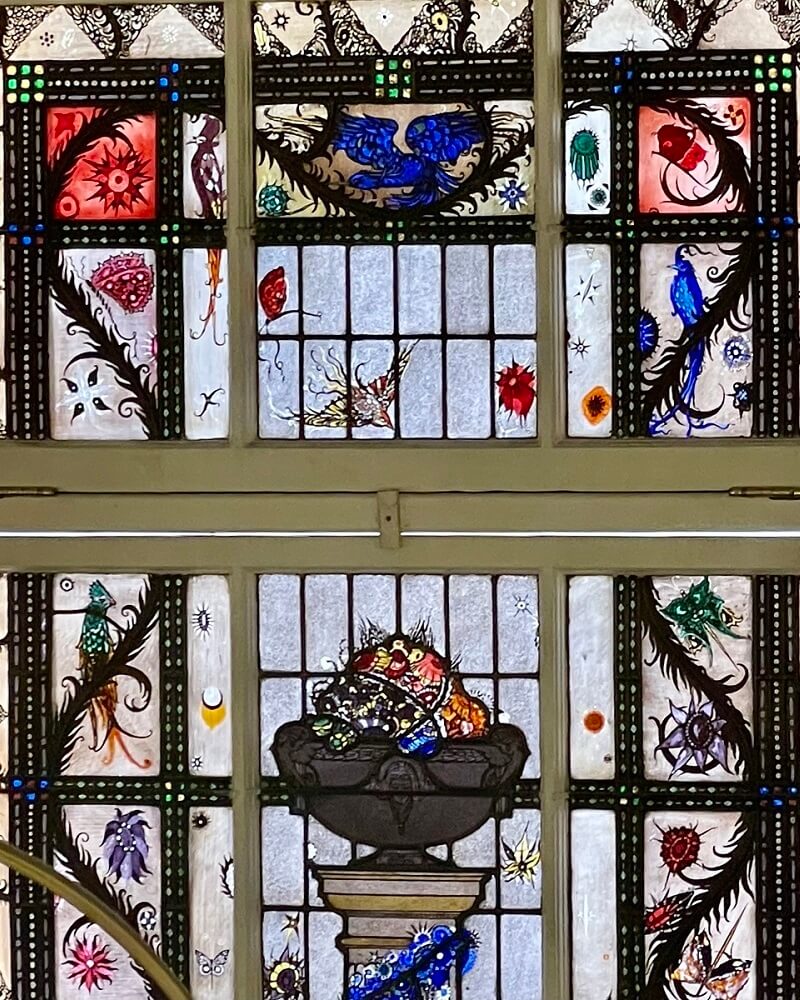
Clarke’s windows fill the ground floor with jewel-coloured light, mixing tradition with something stranger and more modern.
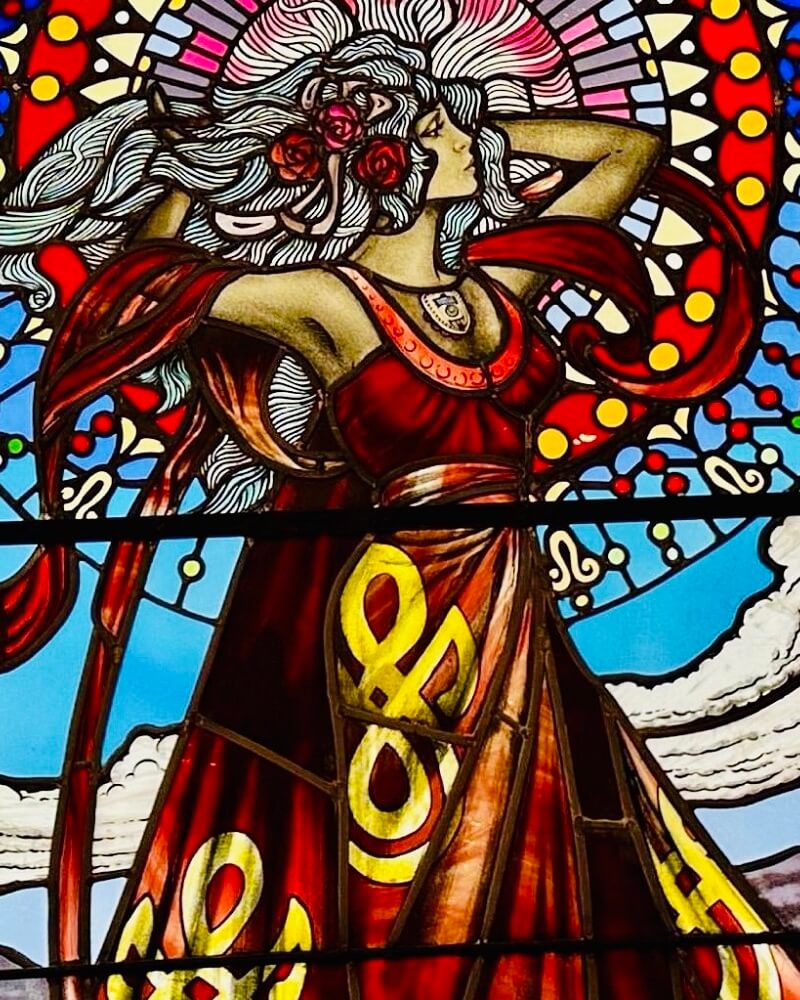
Jim Fitzpatrick, Cruitne
Commissioned in 1990, Cruitne draws on a figure from Celtic myth, in Fitzpatrick’s unmistakable style.
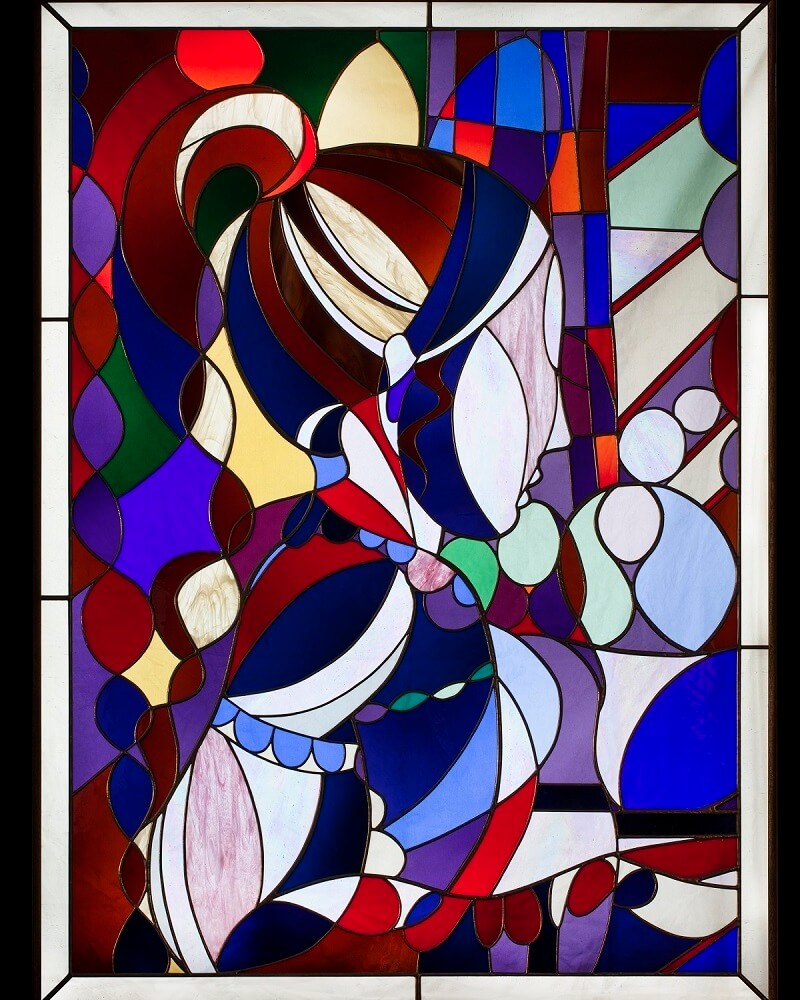
Pauline Bewick, Café Society
Bewick’s windows set a punk and a princess beside Clarke’s masterpieces: Dublin café life, then and now.
The Mary Cake
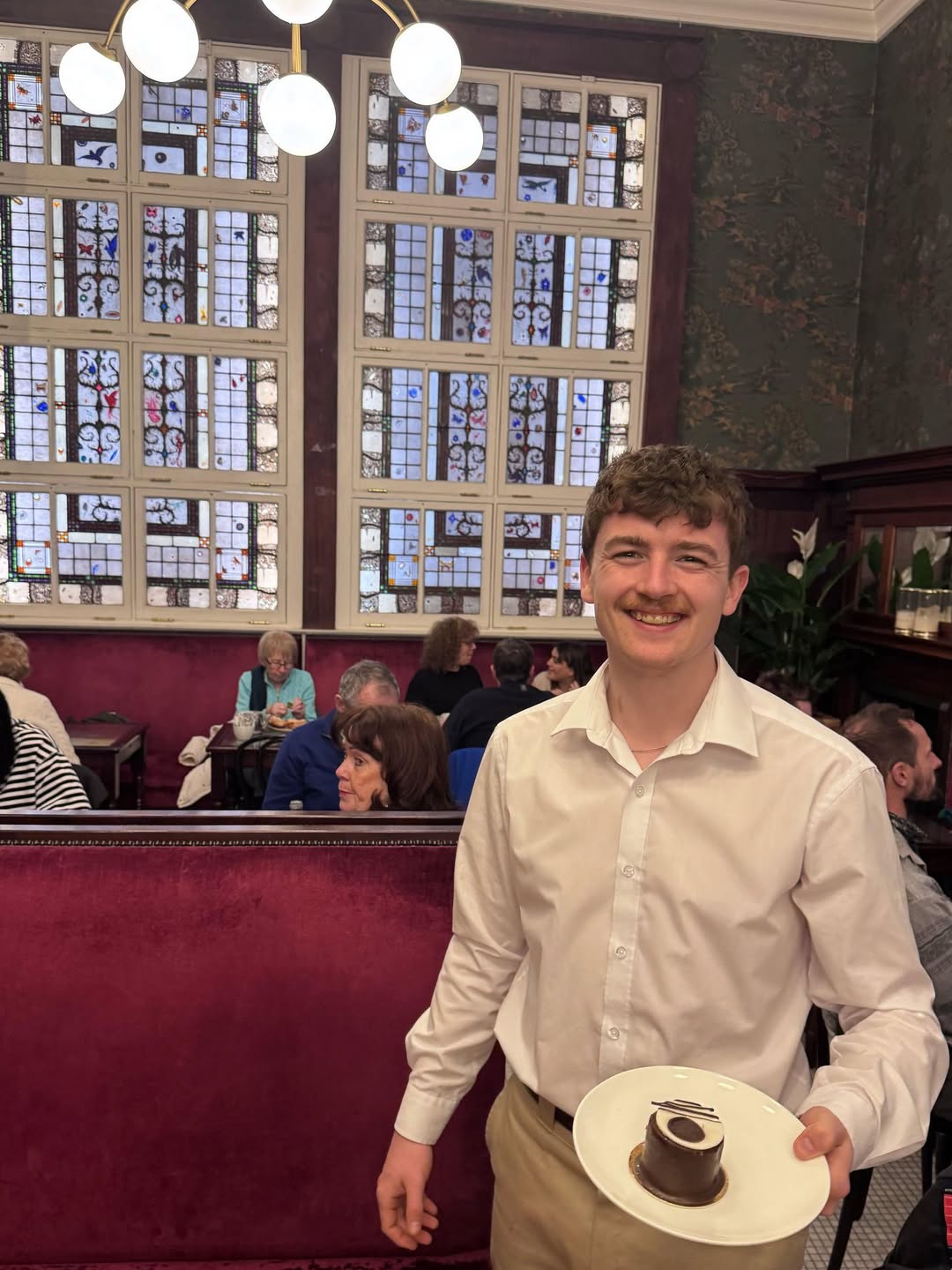
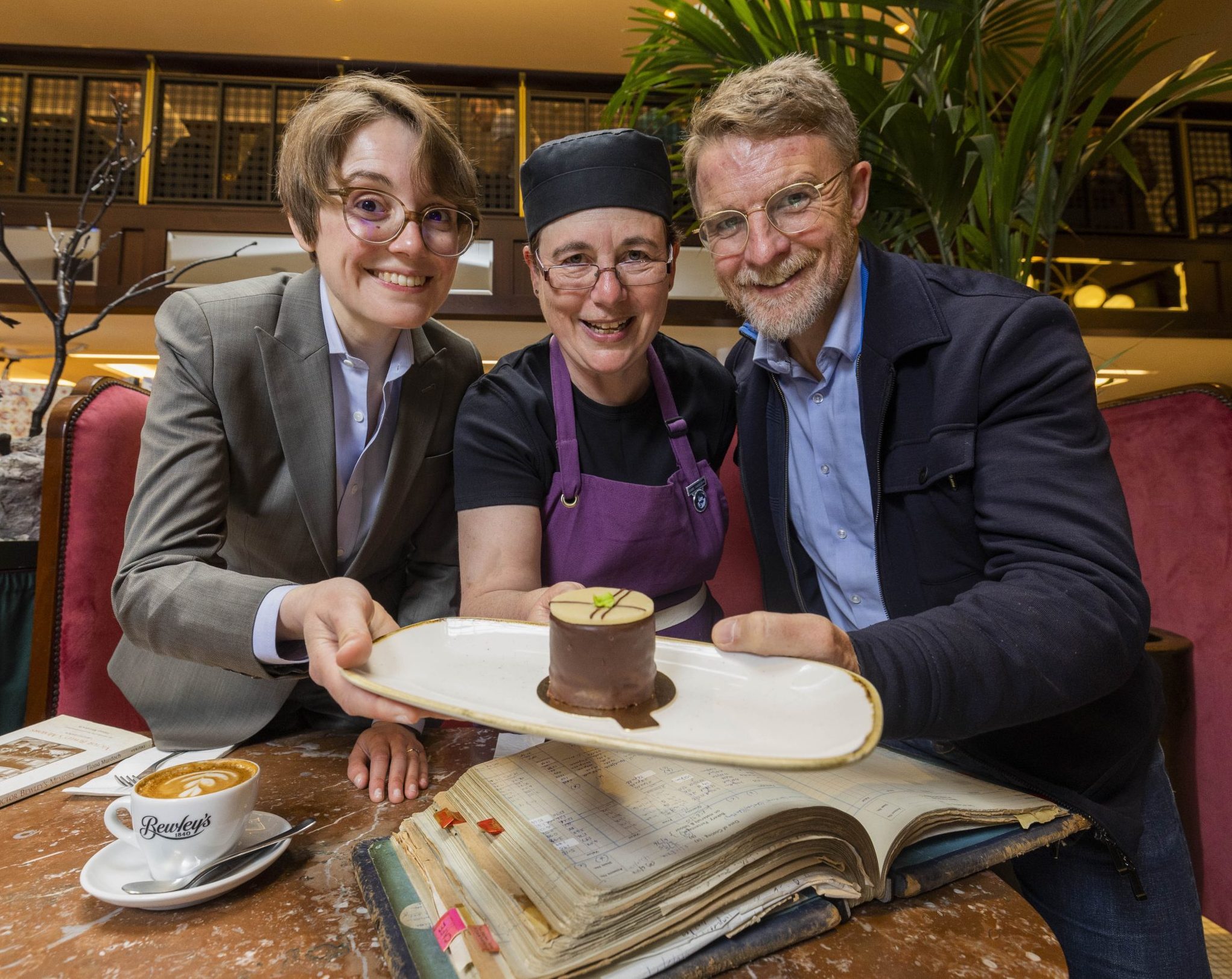
A small tower of chocolate mousse with apricot and almond, under a chocolate glaze.
Henry Spelter came to Ireland as a refugee after the 1956 Hungarian Uprising and found work and training at Bewley’s, a business founded by a family who had once been refugees themselves. With Alfred Bewley he adapted his recipe for the café, and it stayed a favourite for decades, until it was lost during renovations.
Twenty years later, Victor Bewley’s granddaughter Hazel Carmichael traced Henry’s granddaughter Carolina Malagon to New York, where his handwritten recipes had been kept. The Mary Cake came home in 2022. In October 2026, seventy years after the Uprising, the team brought Mary Cakes to the Hungarian Embassy in Dublin.
€1 from every Mary Cake goes to the Irish Red Cross.
The Café Theatre
Since 1999 the room upstairs has been Ireland’s best-known home of lunchtime theatre: a one-act play at 1pm, finished by two.
Classic one-acts by Shaw, Wilde and O’Casey share the programme with new Irish writing. The theatre won the Irish Times Judges’ Special Award in 2004.